/ Mar 28, 2026
When you lean back and watch Kill Bill: Vol. 1, you’re plunging into an electrifying world of vengeance, style, and cinematic homage. The film isn’t just about a bride with a sword and a score to settle — it’s about characters so vivid, so distinctive, that the cast behind them becomes a story in itself. From the lead role of the Bride (Beatrix Kiddo) to the shadowy mastermind Bill, each actor brings personality, conflict and texture that elevate a simple revenge narrative into something legendary.
Here we take a detailed look at the main cast of Kill Bill: Vol. 1, the characters they inhabit, what their performances bring to the table and why the ensemble matters so much in making the film one of the modern action classics.
Spotlight goes first to Uma Thurman — the linchpin of the film’s emotional and physical energy. She embodies the Bride, a former assassin turned victim turned avenger. Her journey drives the entire movie: waking from a coma after her wedding rehearsal massacre, discovering she lost her child, and going after the Deadly Viper Assassination Squad one by one.
Thurman’s performance captures both vulnerability and relentless rage. The bright yellow jumpsuit scene isn’t just a costume moment – it symbolises the Bride’s transformation from wounded bride into unstoppable force. According to sources, Tarantino wrote the part specifically for Thurman, citing her as muse. Wikipedia+2Screen Rant+2
Her presence anchors the film. Anytime the camera is on her, you feel both the history of what she’s been through and the inevitability of what she’s about to do. Many viewers say that without Thurman’s commitment to the role, the film might’ve been stylised but hollow. With her, it’s visceral.
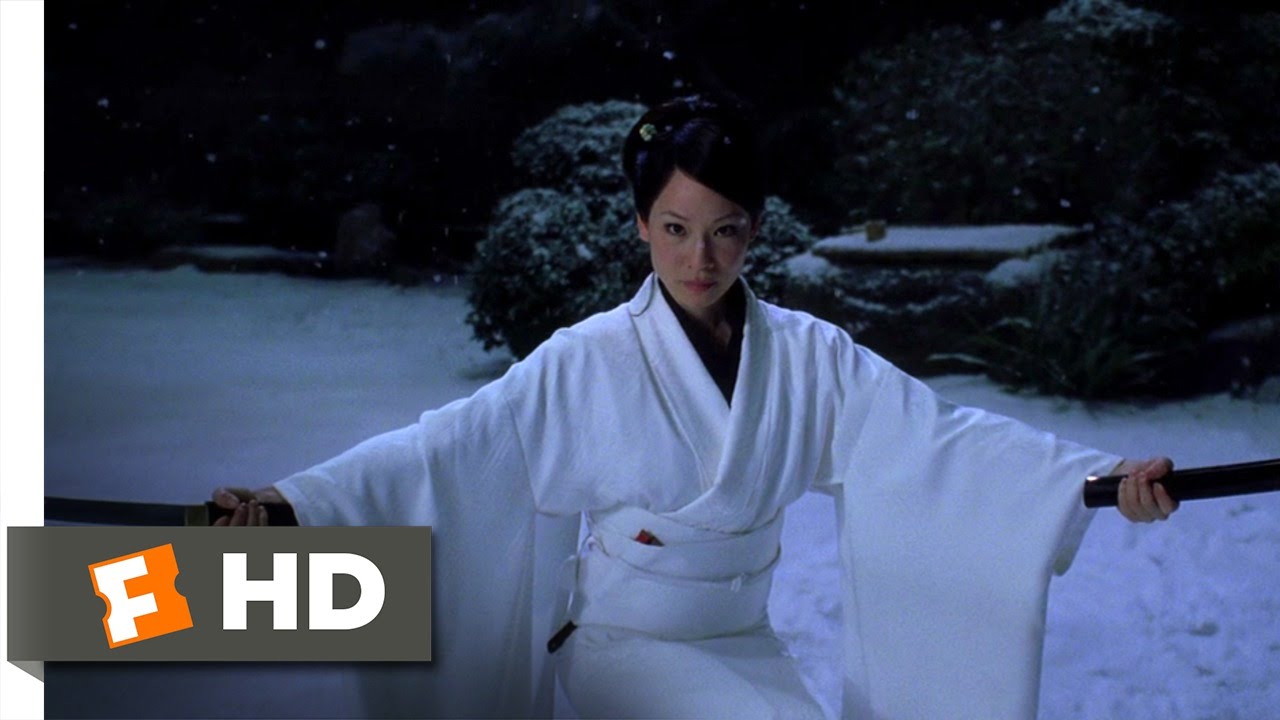
Next, Lucy Liu’s performance as O-Ren Ishii stands out as a paradigm of elegance and menace blended into one. O-Ren is a deadly Yakuza boss, operating from Tokyo, who emerges as one of the Bride’s most formidable opponents. Liu approaches the role with cool precision – her character is beautifully dressed, fiercely ruthless and emotionally complex.
In the House of Blue Leaves sequence, Liu shines. The dance of swords, the calm before the storm, the flashback origin story—all contribute to making O-Ren memorable. Critics note that the cast list for Kill Bill matches actor to role so well that each major character feels fully realised.
The performance is significant because it shows that action cinema can have depth. O-Ren’s rise, her code of honour, and her showdown with the Bride are more than plot mechanics—they’re character drama realized through combat.
Vivica Fox plays Vernita Green (codename “Copperhead”), an assassin turned suburban mom whose past comes haunting her. That duality—she’s cooking dinner and yet still deadly—is one of the film’s standout contrasts. The scene in her house is both domestic and violently primal.
In an interview-style breakdown of the cast and characters, analysts highlight that Fox’s Vernita captures an assassin burdened by what she’s done and who she’s become. The ensemble strength of Kill Bill lies in such layered roles. tino’s world, women aren’t side characters. They are the core. Vernita may have less screen time than the Bride, but the impact of her role resonates—showing that the assassin life doesn’t stay behind once you’ve left the squad.
Daryl Hannah plays Elle Driver (codename “California Mountain Snake”), another member of the Deadly Viper Assassination Squad, and a character who combines glamour, twisted loyalty and venomous humour. Elle is ruthless, calculated, and almost gleeful in her madness. Hannah lends the role a kind of theatrical menace that stands out amidst the film’s broader action-epic style.
The cast list shows how the film filled its ranks with actors who could handle both the physical demands and the performance texture of this stylised world. For Elle, Hannah delivers both playful charisma and cold danger.
Her confrontation with the Bride punctuates the narrative’s moral stakes: this is not just about revenge—it’s about facing former comrades, past lives, identity. Hannah’s Elle represents what the Bride could have become under different choices.
Michael Madsen plays Budd (codename “Sidewinder”), a former partner of Bill and the Bride’s past world. His presence in the film is quieter but deeply affecting. He’s worn, disillusioned and caught in a world he no longer fully inhabits.
In many ensemble-centric films, characters like Budd are relegated to cameo status. But in Kill Bill, even the quieter characters feel essential. Madsen’s performance grounds the film’s excess with memory of what the assassin life cost him.
In a way, Budd is the ghost of the Bride’s old life—one that she must leave behind even as she cannot fully escape it. Madsen’s work gives emotional weight to that proposition.
Bill, portrayed by Carradine, is the mastermind and the emotional pivot of the film’s story—though in Vol. 1 his physical screen time is limited. Still, his presence looms large. He is the reason the Bride’s life was shattered. He is the man she must face at the end of her journey.
Carradine’s voice and calmness provide one of the most unsettling villains in the film’s roster. His performance anchors the revenge narrative with intimacy and cruelty.
Having such a strong actor in this villain role raises the stakes. When the time comes to confront Bill, we feel it—not just as an action beat, but as a personal reckoning.
A legend in Japanese cinema, Sonny Chiba plays Hattori Hanzo, the retired swordsmith who reluctantly returns to craft a blade for the Bride. It’s a smaller role in terms of screen time, but massive in significance.
By including Chiba, the film pays homage to samurai and martial-arts cinema. His presence lends authenticity and lineage. The cast surrounding him—Thurman, Liu, Hannah, etc.—benefit from his quiet gravitas.
Hanzo’s workshop scene is more than exposition. It’s a character moment and a tonal shift. It reminds us that the Bride’s quest isn’t just personal but mythic. Chiba’s performance brings that mythic weight.
When you look at this collection of performers, a few things stand out:
Distinctive character identities: Each cast member has a voice, a style and a presence. The Bride, O-Ren, Elle, Vernita—they’re all vivid. That clarity helps audiences anchor themselves in the film’s high-concept world.
Matching actor to role: Tarantino fills his film with actors who seem tailor-made for their characters. Thurman as the Bride. Liu as O-Ren. Chiba as Hanzo. The cast isn’t just good—they’re perfect.
Performance meets style: Kill Bill is visually bold, and the cast doesn’t fade into the scenery. They lean into the style—big action beats, colourful characters, genre-blending.
Emotional and physical stakes: The film asks its cast to work physically and emotionally. From training for fights to holding a quiet gaze in a dramatic moment, the cast delivers both sides.
Supporting strength: The lead is strong, yes, but the supporting cast (Madsen, Fox, Hannah) give the film texture and depth. They turn it from revenge flick into layered ensemble piece.
These factors combine to make the Kill Bill cast memorable—not just actors in roles, but a team of performers creating a world.
Here are some of the standout moments where the cast shine:
The Bride’s opening scene: Thurman’s silent walk through the hospital, the flashback of the massacre. It sets the tone for character and performance.
Boxed fight with Vernita Green: Fox’s character may appear domestic, but the assassin inside her emerges. That contrast is captured brilliantly through Fox’s performance.
House of Blue Leaves battle: Liu vs Thurman in the legendary duel. One of those scenes where performance, choreography and character converge.
The Hanzo scene: The calm before the storm. Chiba’s presence shifts the tone from brutality to resolution.
Bill’s reveal and menace: Carradine’s Bill might have limited screen time in Vol. 1, but his presence is felt and builds momentum for what comes after.
Each of these moments rely on more than choreography—they rely on actors inhabiting roles completely.
Why does Kill Bill still feel fresh more than two decades later? The cast is a major reason. Because the actors bring such commitment, the film transcends being just a homage to martial arts or revenge cinema—it becomes something personal, stylish and enduring.
In many ways, the cast helped redefine what female-led action cinema could be. Uma Thurman’s Bride is a revenge hero, yes, but also a character with agency, wit and presence. The other female assassins (Liu, Hannah, Fox) aren’t just background—they’re central. That shift matters.
Also, the inclusion of international actors (Chiba, Liu, Kunimura, etc) elevated the film’s global flavour. The cast wasn’t just Hollywood—it reached across cultures. That broad casting helped the film appeal widely and age well.
The cast also boosted the careers of several actors. For example, Lucy Liu became a bigger star internationally; Daryl Hannah showcased a different side of her range; Sonny Chiba got renewed attention among Western audiences.
Casting in Kill Bill reflects Tarantino’s formula: pick actors who feel right, then give them something big to work with. Thurman, having worked with Tarantino before in Pulp Fiction, was a natural choice for the Bride.
Liu and Hannah are interesting because they bring both glamour and fight-chops. Tarantino uses their charisma to balance the film’s violence with personality. Fox’s Vernita is a role undercutting expectations, and Madsen’s Budd is the weary brother of violence. Chiba brings silent weight.
In preparation, cast members underwent training for fight sequences and sword work. Because the film pays homage to martial arts and samurai cinema, cast had to match that physicality with performance. Equally, they had to carry dialogue and emotion—this is not a mute action film.
Casting also reflects world-building. The Deadly Viper Assassination Squad (codename list, colour motifs, scars) isn’t just a gimmick—it’s a carefully cast ensemble. Each member’s appearance, cadence, and performance match the film’s stylised world. Screen Rant’s cast guide emphasises how the match between actor and character is crucial.
Kill Bill might be a revenge film, but it also plays with genres: spaghetti western, samurai sword-play, kung-fu, blaxploitation, grindhouse. The cast helps in that genre blending. They are comfortable both in dialogue heavy scenes and in fast-paced fight sequences.
For example: Thurman can deliver wry lines and then perform intense sword choreography. Liu can play ruthless boss and duel-magician. Hannah can pull off a sly survivalist assassin. That cast flexibility allows the film to shift tone effortlessly.
Additionally, having such a strong ensemble meant that even when the lead is off-screen, you feel the presence of the others—which makes every scene feel alive. The cast doesn’t just perform—they inhabit the world.
While the above are the most visible names, the film’s success also depends on supporting performers:
Chiaki Kuriyama as Go Go Yubari, whose iconic ball-and-chain fight became a pop-culture moment.
Julie Dreyfus as Sofie Fatale, quietly manipulative with a cold professionalism.
Japanese actors such as Jun Kunimura (Boss Tanaka) and Akaji Maro (Boss Ozawa) add authenticity to the Tokyo sequences.
These performers might not carry the film alone, but they enrich its world, making it vibrant and globally scaled. It’s unusual for an action film to integrate such wide-ranging talent so seamlessly.
What makes the cast’s impact durable? Several factors:
Iconic roles: The Bride, O-Ren, Elle, Vernita—these characters became iconic in their own right.
Cultural reach: Because the cast spans Hollywood and international cinema, the film found audiences worldwide.
Genre evolution: The cast enabled a film where style and substance co-exist—helping shift how female-led action films are seen.
Pop-culture imprint: Costumes, fight scenes, characters appear in everything from cosplay to memes. The cast’s visual identity sticks.
In many interviews, Thurman and others reflect on how the film changed perceptions—about women in action, about ensemble casts in revenge narratives, and about the blending of international talent in mainstream cinema.
When you leave the cinema after watching Kill Bill: Vol. 1, what stays with you isn’t just the violence or the blood or the soundtrack—it’s the characters. The memory of the Bride walking, the image of O-Ren on her throne, the tension between Elle and Budd, the quiet menace of Bill. That’s all because the cast doesn’t feel like actors playing parts—they feel like the roles themselves.
If you’re thinking of watching Kill Bill again, focus not just on the fights or the style, but on how the cast shapes each moment. Notice Thurman’s stillness in motion. How Liu’s tone shifts when she becomes O-Ren Ishii. How Fox brings suburban normalcy to a deadly assassin. How Madsen carries regret in a single look. How Chiba’s Hanzo gives mythic weight with a few words.
They don’t just fill the roles—they build the world. And that is why the Kill Bill cast remains one of the most memorable ensembles in modern cinema.
When you lean back and watch Kill Bill: Vol. 1, you’re plunging into an electrifying world of vengeance, style, and cinematic homage. The film isn’t just about a bride with a sword and a score to settle — it’s about characters so vivid, so distinctive, that the cast behind them becomes a story in itself. From the lead role of the Bride (Beatrix Kiddo) to the shadowy mastermind Bill, each actor brings personality, conflict and texture that elevate a simple revenge narrative into something legendary.
Here we take a detailed look at the main cast of Kill Bill: Vol. 1, the characters they inhabit, what their performances bring to the table and why the ensemble matters so much in making the film one of the modern action classics.
Spotlight goes first to Uma Thurman — the linchpin of the film’s emotional and physical energy. She embodies the Bride, a former assassin turned victim turned avenger. Her journey drives the entire movie: waking from a coma after her wedding rehearsal massacre, discovering she lost her child, and going after the Deadly Viper Assassination Squad one by one.
Thurman’s performance captures both vulnerability and relentless rage. The bright yellow jumpsuit scene isn’t just a costume moment – it symbolises the Bride’s transformation from wounded bride into unstoppable force. According to sources, Tarantino wrote the part specifically for Thurman, citing her as muse. Wikipedia+2Screen Rant+2
Her presence anchors the film. Anytime the camera is on her, you feel both the history of what she’s been through and the inevitability of what she’s about to do. Many viewers say that without Thurman’s commitment to the role, the film might’ve been stylised but hollow. With her, it’s visceral.
Next, Lucy Liu’s performance as O-Ren Ishii stands out as a paradigm of elegance and menace blended into one. O-Ren is a deadly Yakuza boss, operating from Tokyo, who emerges as one of the Bride’s most formidable opponents. Liu approaches the role with cool precision – her character is beautifully dressed, fiercely ruthless and emotionally complex.
In the House of Blue Leaves sequence, Liu shines. The dance of swords, the calm before the storm, the flashback origin story—all contribute to making O-Ren memorable. Critics note that the cast list for Kill Bill matches actor to role so well that each major character feels fully realised.
The performance is significant because it shows that action cinema can have depth. O-Ren’s rise, her code of honour, and her showdown with the Bride are more than plot mechanics—they’re character drama realized through combat.
Vivica Fox plays Vernita Green (codename “Copperhead”), an assassin turned suburban mom whose past comes haunting her. That duality—she’s cooking dinner and yet still deadly—is one of the film’s standout contrasts. The scene in her house is both domestic and violently primal.
In an interview-style breakdown of the cast and characters, analysts highlight that Fox’s Vernita captures an assassin burdened by what she’s done and who she’s become. The ensemble strength of Kill Bill lies in such layered roles. tino’s world, women aren’t side characters. They are the core. Vernita may have less screen time than the Bride, but the impact of her role resonates—showing that the assassin life doesn’t stay behind once you’ve left the squad.
Daryl Hannah plays Elle Driver (codename “California Mountain Snake”), another member of the Deadly Viper Assassination Squad, and a character who combines glamour, twisted loyalty and venomous humour. Elle is ruthless, calculated, and almost gleeful in her madness. Hannah lends the role a kind of theatrical menace that stands out amidst the film’s broader action-epic style.
The cast list shows how the film filled its ranks with actors who could handle both the physical demands and the performance texture of this stylised world. For Elle, Hannah delivers both playful charisma and cold danger.
Her confrontation with the Bride punctuates the narrative’s moral stakes: this is not just about revenge—it’s about facing former comrades, past lives, identity. Hannah’s Elle represents what the Bride could have become under different choices.
Michael Madsen plays Budd (codename “Sidewinder”), a former partner of Bill and the Bride’s past world. His presence in the film is quieter but deeply affecting. He’s worn, disillusioned and caught in a world he no longer fully inhabits.
In many ensemble-centric films, characters like Budd are relegated to cameo status. But in Kill Bill, even the quieter characters feel essential. Madsen’s performance grounds the film’s excess with memory of what the assassin life cost him.
In a way, Budd is the ghost of the Bride’s old life—one that she must leave behind even as she cannot fully escape it. Madsen’s work gives emotional weight to that proposition.
Bill, portrayed by Carradine, is the mastermind and the emotional pivot of the film’s story—though in Vol. 1 his physical screen time is limited. Still, his presence looms large. He is the reason the Bride’s life was shattered. He is the man she must face at the end of her journey.
Carradine’s voice and calmness provide one of the most unsettling villains in the film’s roster. His performance anchors the revenge narrative with intimacy and cruelty.
Having such a strong actor in this villain role raises the stakes. When the time comes to confront Bill, we feel it—not just as an action beat, but as a personal reckoning.
A legend in Japanese cinema, Sonny Chiba plays Hattori Hanzo, the retired swordsmith who reluctantly returns to craft a blade for the Bride. It’s a smaller role in terms of screen time, but massive in significance.
By including Chiba, the film pays homage to samurai and martial-arts cinema. His presence lends authenticity and lineage. The cast surrounding him—Thurman, Liu, Hannah, etc.—benefit from his quiet gravitas.
Hanzo’s workshop scene is more than exposition. It’s a character moment and a tonal shift. It reminds us that the Bride’s quest isn’t just personal but mythic. Chiba’s performance brings that mythic weight.
When you look at this collection of performers, a few things stand out:
Distinctive character identities: Each cast member has a voice, a style and a presence. The Bride, O-Ren, Elle, Vernita—they’re all vivid. That clarity helps audiences anchor themselves in the film’s high-concept world.
Matching actor to role: Tarantino fills his film with actors who seem tailor-made for their characters. Thurman as the Bride. Liu as O-Ren. Chiba as Hanzo. The cast isn’t just good—they’re perfect.
Performance meets style: Kill Bill is visually bold, and the cast doesn’t fade into the scenery. They lean into the style—big action beats, colourful characters, genre-blending.
Emotional and physical stakes: The film asks its cast to work physically and emotionally. From training for fights to holding a quiet gaze in a dramatic moment, the cast delivers both sides.
Supporting strength: The lead is strong, yes, but the supporting cast (Madsen, Fox, Hannah) give the film texture and depth. They turn it from revenge flick into layered ensemble piece.
These factors combine to make the Kill Bill cast memorable—not just actors in roles, but a team of performers creating a world.
Here are some of the standout moments where the cast shine:
The Bride’s opening scene: Thurman’s silent walk through the hospital, the flashback of the massacre. It sets the tone for character and performance.
Boxed fight with Vernita Green: Fox’s character may appear domestic, but the assassin inside her emerges. That contrast is captured brilliantly through Fox’s performance.
House of Blue Leaves battle: Liu vs Thurman in the legendary duel. One of those scenes where performance, choreography and character converge.
The Hanzo scene: The calm before the storm. Chiba’s presence shifts the tone from brutality to resolution.
Bill’s reveal and menace: Carradine’s Bill might have limited screen time in Vol. 1, but his presence is felt and builds momentum for what comes after.
Each of these moments rely on more than choreography—they rely on actors inhabiting roles completely.
Why does Kill Bill still feel fresh more than two decades later? The cast is a major reason. Because the actors bring such commitment, the film transcends being just a homage to martial arts or revenge cinema—it becomes something personal, stylish and enduring.
In many ways, the cast helped redefine what female-led action cinema could be. Uma Thurman’s Bride is a revenge hero, yes, but also a character with agency, wit and presence. The other female assassins (Liu, Hannah, Fox) aren’t just background—they’re central. That shift matters.
Also, the inclusion of international actors (Chiba, Liu, Kunimura, etc) elevated the film’s global flavour. The cast wasn’t just Hollywood—it reached across cultures. That broad casting helped the film appeal widely and age well.
The cast also boosted the careers of several actors. For example, Lucy Liu became a bigger star internationally; Daryl Hannah showcased a different side of her range; Sonny Chiba got renewed attention among Western audiences.
Casting in Kill Bill reflects Tarantino’s formula: pick actors who feel right, then give them something big to work with. Thurman, having worked with Tarantino before in Pulp Fiction, was a natural choice for the Bride.
Liu and Hannah are interesting because they bring both glamour and fight-chops. Tarantino uses their charisma to balance the film’s violence with personality. Fox’s Vernita is a role undercutting expectations, and Madsen’s Budd is the weary brother of violence. Chiba brings silent weight.
In preparation, cast members underwent training for fight sequences and sword work. Because the film pays homage to martial arts and samurai cinema, cast had to match that physicality with performance. Equally, they had to carry dialogue and emotion—this is not a mute action film.
Casting also reflects world-building. The Deadly Viper Assassination Squad (codename list, colour motifs, scars) isn’t just a gimmick—it’s a carefully cast ensemble. Each member’s appearance, cadence, and performance match the film’s stylised world. Screen Rant’s cast guide emphasises how the match between actor and character is crucial.
Kill Bill might be a revenge film, but it also plays with genres: spaghetti western, samurai sword-play, kung-fu, blaxploitation, grindhouse. The cast helps in that genre blending. They are comfortable both in dialogue heavy scenes and in fast-paced fight sequences.
For example: Thurman can deliver wry lines and then perform intense sword choreography. Liu can play ruthless boss and duel-magician. Hannah can pull off a sly survivalist assassin. That cast flexibility allows the film to shift tone effortlessly.
Additionally, having such a strong ensemble meant that even when the lead is off-screen, you feel the presence of the others—which makes every scene feel alive. The cast doesn’t just perform—they inhabit the world.
While the above are the most visible names, the film’s success also depends on supporting performers:
Chiaki Kuriyama as Go Go Yubari, whose iconic ball-and-chain fight became a pop-culture moment.
Julie Dreyfus as Sofie Fatale, quietly manipulative with a cold professionalism.
Japanese actors such as Jun Kunimura (Boss Tanaka) and Akaji Maro (Boss Ozawa) add authenticity to the Tokyo sequences.
These performers might not carry the film alone, but they enrich its world, making it vibrant and globally scaled. It’s unusual for an action film to integrate such wide-ranging talent so seamlessly.
What makes the cast’s impact durable? Several factors:
Iconic roles: The Bride, O-Ren, Elle, Vernita—these characters became iconic in their own right.
Cultural reach: Because the cast spans Hollywood and international cinema, the film found audiences worldwide.
Genre evolution: The cast enabled a film where style and substance co-exist—helping shift how female-led action films are seen.
Pop-culture imprint: Costumes, fight scenes, characters appear in everything from cosplay to memes. The cast’s visual identity sticks.
In many interviews, Thurman and others reflect on how the film changed perceptions—about women in action, about ensemble casts in revenge narratives, and about the blending of international talent in mainstream cinema.
When you leave the cinema after watching Kill Bill: Vol. 1, what stays with you isn’t just the violence or the blood or the soundtrack—it’s the characters. The memory of the Bride walking, the image of O-Ren on her throne, the tension between Elle and Budd, the quiet menace of Bill. That’s all because the cast doesn’t feel like actors playing parts—they feel like the roles themselves.
If you’re thinking of watching Kill Bill again, focus not just on the fights or the style, but on how the cast shapes each moment. Notice Thurman’s stillness in motion. How Liu’s tone shifts when she becomes O-Ren Ishii. How Fox brings suburban normalcy to a deadly assassin. How Madsen carries regret in a single look. How Chiba’s Hanzo gives mythic weight with a few words.
They don’t just fill the roles—they build the world. And that is why the Kill Bill cast remains one of the most memorable ensembles in modern cinema.