News Elementor – News WordPress Theme 2023. Powered By BlazeThemes.
Blog
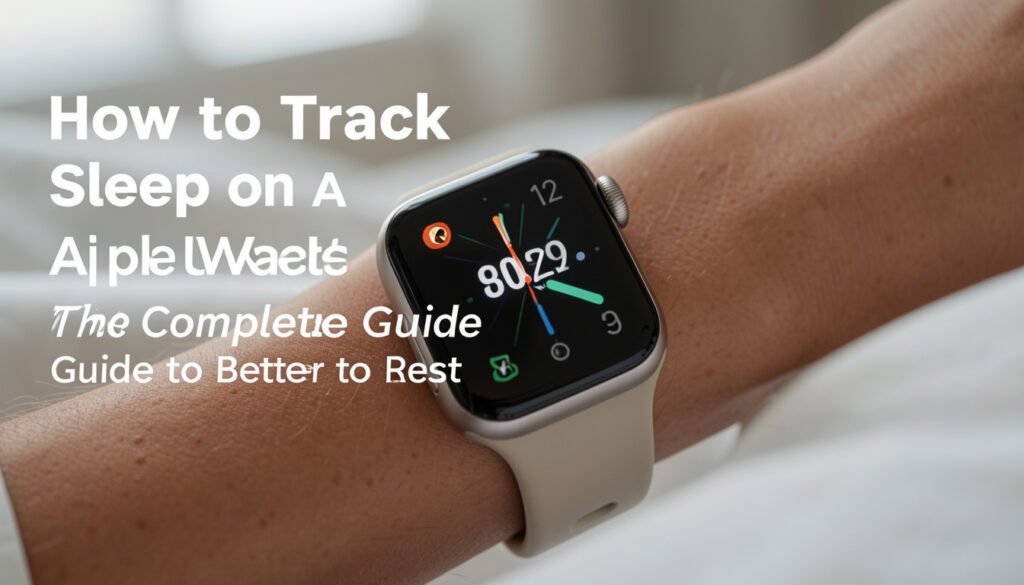
How to Track Sleep on Apple Watch: The Complete Guide to Better Rest
guestpostagnecy@gmail.com
August 4, 2026
Getting a good night of sleep is essential for your body, mind, and overall health. If you own an Apple Watch, you already have a powerful health companion sitting right on your wrist. Many users do not realize how simple it is to monitor their nightly recovery using built-in software. Learning how to track sleep on apple watch allows you to see how long you rest, measure your sleep stages, and build healthier bedtime habits over time. In this comprehensive guide, we will walk through every step needed to unlock your watch’s full rest-monitoring potential.
Understanding how to track sleep on apple watch does not require tech expertise or complicated third-party applications. Apple provides built-in tools that automatically record your body motion, heart rate, and overnight breathing patterns. Whether you want to fix a messy sleeping schedule or simply check your sleep score every morning, your watch gives you clear data. By using these insights daily, you can make smarter choices about your evening routines and enjoy more energizing mornings. Let us dive straight into how this health tool functions across modern devices.
Quick Comparison: Sleep Tracking Capabilities by Apple Watch Model
Apple Watch Model
Supported watchOS
Sleep Stages (REM, Core, Deep)
Wrist Temp & Sleep Score
Apple Watch Series 3 to 6
watchOS 7 to 8+
Basic Sleep vs Awake
Supported on watchOS 9+
Apple Watch Series 7
watchOS 8 to latest
Full Sleep Stage Tracking
Supported on watchOS 9+
Apple Watch Series 8 / 9 / 10
watchOS 9 to latest
Full Sleep Stage Tracking
Full Temp Tracking & Score
Apple Watch Ultra & Ultra 2
watchOS 9 to latest
Advanced Sleep Stage Tracking
Full Temp Tracking & Extended Battery
What Is Apple Watch Sleep Tracking?
Apple Watch sleep tracking is an integrated wellness system that monitors your body movements, heart rate, and respiration while you rest. Instead of guessing how many hours you slept, your smartwatch generates precise daily charts directly inside the Health application. When you master how to track sleep on apple watch, you gain valuable visibility into your nighttime rest habits. The built-in sensors detect when you fall asleep and track every time you wake up during the night.
The entire tracking system relies on motion sensors called accelerometers, along with optical heart rate sensors on the back of the watch casing. These sensors send continuous data to your paired iPhone, where the software categorizes your rest into distinct sleep stages. By understanding how to track sleep on apple watch, you learn how lifestyle choices like late meals, caffeine, or evening screen time directly impact your recovery. It is one of the easiest ways to improve your daily wellness without buying extra equipment.
How to Set Up Sleep Tracking in the iPhone Health App
Setting up your device for nightly monitoring begins on your paired iPhone. Before you learn how to track sleep on apple watch, you need to establish a primary sleep schedule in the Health app. Open the Health app, tap the Search or Browse tab at the bottom, and select the Sleep category. Tap Get Started under the Set Up Sleep section to begin the quick configuration process.
The setup assistant prompts you to set a daily sleep goal, such as eight hours of rest per night. Next, you choose your preferred bedtime and wake-up alarm times using the circular wheel interface. You can create unique schedules for weekdays and weekends so your alarm never interrupts your resting days. Make sure you toggle the option to use your schedule for Sleep Focus mode, which automatically dims your screen and mutes incoming phone notifications.
How to Track Sleep on Apple Watch Official Settings
Once your iPhone schedule is configured, you must verify the settings on your wrist. To learn how to track sleep on apple watch official settings, open the Settings app directly on your smartwatch display. Scroll down through the menu list and tap on the Sleep option to review all active toggles. Make sure that the switch labeled Sleep Tracking is turned green and active.
You should also turn on the Charging Reminders feature inside these settings. This helpful alert notifies you one hour before bedtime if your watch battery drops below thirty percent. If the battery dies overnight, the device cannot collect any health data while you sleep. Knowing how to track sleep on apple watch official settings ensures your device stays powered and ready to record every single minute of your nightly rest.
Following the How to Track Sleep on Apple Watch Official Guide
Apple designs its health features to operate automatically once set up correctly. Following the how to track sleep on apple watch official guide means wearing your smartwatch to bed consistently every night. Ensure the band feels comfortably snug around your wrist so the optical sensors maintain clear skin contact without causing irritation. A loose watch band can lead to missed heart rate readings or inaccurate motion detection.
According to the how to track sleep on apple watch official guide, you must wear the watch for at least four hours each night to generate full sleep stage metrics. When your scheduled Wind Down time begins, your watch screen automatically dims and enters Sleep Focus mode. You do not need to press any start buttons before closing your eyes. As long as the device is on your wrist, it handles all tracking in the background seamlessly.
How to Track Sleep on Apple Watch Ultra Models
If you own an Apple Watch Ultra or Ultra 2, you have access to extra long battery life and rugged hardware. Learning how to track sleep on apple watch ultra devices is identical in setup, but offers substantial benefits for multi-day usage. The Ultra’s large battery allows you to track multiple nights of sleep on a single charge without constantly searching for a power outlet.
To optimize how to track sleep on apple watch ultra models, consider changing your watch band to a comfortable fabric band like the Alpine Loop or Trail Loop. Heavy metal or thick rubber bands can feel bulky when resting your wrist on a pillow. Furthermore, Ultra models include advanced skin temperature sensors that measure nightly wrist temperature baseline shifts, offering deeper insights into your overall recovery and wellness trends.
How to Track Sleep on Apple Watch Series 7 and Later
Users who own older devices often ask how to track sleep on apple watch series 7 or newer models. The Series 7 runs watchOS software smoothly, giving you access to full sleep stage breakdowns, heart rate tracking, and respiratory rate monitoring. To ensure accurate monitoring on a Series 7, keep your watch updated to the latest watchOS version available.
When reviewing how to track sleep on apple watch series 7, fast charging support is a major advantage. The Series 7 charges significantly faster than earlier models, allowing you to top up your battery in just eight to fifteen minutes before hopping into bed. Learning how to track sleep on apple watch on Series 7 devices guarantees you get modern sleep stage analysis without needing the absolute newest flagship watch.
How to Set Up Sleep Focus Mode for Distraction-Free Rest
Sleep Focus mode is a crucial component when discovering how to track sleep on apple watch effectively. This special focus state turns off your watch display so bright screen glare does not wake you up when you turn in bed. It also silences incoming phone calls, app text notifications, and vibration alerts during your scheduled sleep hours.
You can easily customize Sleep Focus settings inside your iPhone Settings menu under the Focus section. You can choose specific emergency contacts or critical health apps that are allowed to bypass the silent filter. If you go to bed earlier than your scheduled sleep time, simply swipe up on your watch screen to open Control Center and tap the bed icon to turn on Sleep Focus manually.
Understanding Your Sleep Stages: Core, REM, and Deep Sleep
When you open your sleep results each morning, the Health app divides your time asleep into three main sleep stages plus awake periods. Understanding these stages helps you evaluate how well your body recovers overnight.
Core Sleep: Represents light and middle-stage rest where your muscles relax and brain waves slow down. It typically makes up the largest portion of your total sleep duration.
REM Sleep: Stands for Rapid Eye Movement sleep, which is essential for memory consolidation, creative thinking, and brain health. Dreams occur primarily during this active sleep phase.
Deep Sleep: The most physically restorative stage where your heart rate slows, muscles repair themselves, and the immune system strengthens.
Awake Time: Short periods throughout the night when your body shifts or briefly wakes up, even if you do not remember it in the morning.
Knowing how to track sleep on apple watch gives you a clear visual breakdown of these percentages every day.
How to View Your Morning Sleep Score and Sleep Trends
Every morning after waking up, you can review your complete health analysis on either your watch or your iPhone. Open the Sleep application on your watch display to see your overall time asleep, total sleep score, and a fourteen-day sleep trend chart. Your sleep score rates your rest quality on a scale from 0 to 100 based on sleep duration, bedtime consistency, and overnight interruptions.
For a broader view, open the Health app on your iPhone, tap Search, and select Sleep. The app displays daily, weekly, monthly, and six-month bar graphs that highlight your long-term habits. When you master how to track sleep on apple watch, these trends reveal whether your sleep duration is improving or if weekend schedule shifts are causing fatigue.
Essential Battery Tips for Nighttime Sleep Tracking
Running out of battery in the middle of the night is the most common reason users fail to record their rest. Your watch needs at least thirty percent battery life to run tracking features throughout an eight-hour night. Incorporating a brief daily charging habit prevents unexpected shutdown issues.
The best time to charge your watch is during your evening Wind Down routine or while getting ready in the morning. Place your device on its magnetic charger while taking a shower or brushing your teeth. Turning on Charging Reminders in the watch app ensures your phone alerts you before bedtime if a quick top-up is required.
Troubleshooting Common Apple Watch Sleep Tracking Issues
If your watch stops recording sleep data, a few quick fixes usually solve the problem. First, verify that your watch fits snugly against your wrist so sensors can read your vitals accurately. Second, check that Track Sleep with Apple Watch is toggled on in the Watch app settings on your iPhone.
Another common issue occurs when Sleep Focus is turned off or misaligned with your actual sleep times. If you fall asleep before your scheduled time, manually enable Sleep Focus from the Control Center. Restarting both your iPhone and Apple Watch can also refresh sync connections if health data delays appearing in the Health app.
Expert Tips to Improve Your Overall Sleep Quality
Tracking your rest is only the first step toward better health. Once you learn how to track sleep on apple watch, you can use your personal data to make positive lifestyle adjustments. Establishing a consistent bedtime and wake-up time train your body’s internal biological clock.
Try to limit bright screen exposure, heavy meals, and caffeine during your Wind Down period. Keep your bedroom cool, dark, and quiet to encourage longer periods of deep physical recovery. By matching healthy habits with accurate daily monitoring, you can maximize your rest and wake up feeling refreshed every morning.
Conclusion
Learning how to track sleep on apple watch is one of the best choices you can make for your personal health and daily energy levels. By setting up a personalized sleep schedule, enabling Sleep Focus, and keeping your device charged, you unlock powerful health monitoring right on your wrist. Whether you wear an Apple Watch Series 7 or an Ultra model, consistent nightly tracking provides clear insights into your sleep stages and long-term wellness. Start tracking your sleep tonight to take full control of your rest and recovery!
FAQs
1. Do I need to turn on Sleep Focus manually every night?
No, if you have a sleep schedule configured in the Health app, Sleep Focus turns on automatically at your scheduled Wind Down time. However, if you go to sleep earlier than usual, you can turn it on manually from the Control Center.
2. How much battery does Apple Watch sleep tracking use overnight?
Overnight tracking typically consumes between 10% and 20% of your watch battery, depending on your watch model and display settings. It is recommended to have at least 30% battery before going to sleep.
3. Can I track sleep on Apple Watch without setting a schedule?
Yes, you can track sleep without a strict schedule by manually enabling Sleep Focus before you fall asleep. As long as Sleep Focus is active and you wear the watch for at least one hour, it records your rest data.
4. What is the difference between Core sleep and Deep sleep?
Core sleep represents light to moderate rest where your body relaxes, while Deep sleep is the restorative stage responsible for physical repair, muscle recovery, and immune system health.
5. Why did my Apple Watch fail to record my sleep last night?
Sleep tracking can fail if your watch battery drops below 0%, if the watch fit is too loose on your wrist, or if Sleep Tracking is disabled in your watch settings.
6. Does Apple Watch sleep tracking work if I take an afternoon nap?
Apple Watch sleep tracking focuses primarily on your main nightly sleep schedule or active Sleep Focus sessions lasting over one hour. Naps shorter than an hour or outside of Focus mode may not always appear in your daily stage breakdowns.
Getting a good night of sleep is essential for your body, mind, and overall health. If you own an Apple Watch, you already have a powerful health companion sitting right on your wrist. Many users do not realize how simple it is to monitor their nightly recovery using built-in software. Learning how to track sleep on apple watch allows you to see how long you rest, measure your sleep stages, and build healthier bedtime habits over time. In this comprehensive guide, we will walk through every step needed to unlock your watch’s full rest-monitoring potential.
Understanding how to track sleep on apple watch does not require tech expertise or complicated third-party applications. Apple provides built-in tools that automatically record your body motion, heart rate, and overnight breathing patterns. Whether you want to fix a messy sleeping schedule or simply check your sleep score every morning, your watch gives you clear data. By using these insights daily, you can make smarter choices about your evening routines and enjoy more energizing mornings. Let us dive straight into how this health tool functions across modern devices.
Quick Comparison: Sleep Tracking Capabilities by Apple Watch Model
Apple Watch Model
Supported watchOS
Sleep Stages (REM, Core, Deep)
Wrist Temp & Sleep Score
Apple Watch Series 3 to 6
watchOS 7 to 8+
Basic Sleep vs Awake
Supported on watchOS 9+
Apple Watch Series 7
watchOS 8 to latest
Full Sleep Stage Tracking
Supported on watchOS 9+
Apple Watch Series 8 / 9 / 10
watchOS 9 to latest
Full Sleep Stage Tracking
Full Temp Tracking & Score
Apple Watch Ultra & Ultra 2
watchOS 9 to latest
Advanced Sleep Stage Tracking
Full Temp Tracking & Extended Battery
What Is Apple Watch Sleep Tracking?
Apple Watch sleep tracking is an integrated wellness system that monitors your body movements, heart rate, and respiration while you rest. Instead of guessing how many hours you slept, your smartwatch generates precise daily charts directly inside the Health application. When you master how to track sleep on apple watch, you gain valuable visibility into your nighttime rest habits. The built-in sensors detect when you fall asleep and track every time you wake up during the night.
The entire tracking system relies on motion sensors called accelerometers, along with optical heart rate sensors on the back of the watch casing. These sensors send continuous data to your paired iPhone, where the software categorizes your rest into distinct sleep stages. By understanding how to track sleep on apple watch, you learn how lifestyle choices like late meals, caffeine, or evening screen time directly impact your recovery. It is one of the easiest ways to improve your daily wellness without buying extra equipment.
How to Set Up Sleep Tracking in the iPhone Health App
Setting up your device for nightly monitoring begins on your paired iPhone. Before you learn how to track sleep on apple watch, you need to establish a primary sleep schedule in the Health app. Open the Health app, tap the Search or Browse tab at the bottom, and select the Sleep category. Tap Get Started under the Set Up Sleep section to begin the quick configuration process.
The setup assistant prompts you to set a daily sleep goal, such as eight hours of rest per night. Next, you choose your preferred bedtime and wake-up alarm times using the circular wheel interface. You can create unique schedules for weekdays and weekends so your alarm never interrupts your resting days. Make sure you toggle the option to use your schedule for Sleep Focus mode, which automatically dims your screen and mutes incoming phone notifications.
How to Track Sleep on Apple Watch Official Settings
Once your iPhone schedule is configured, you must verify the settings on your wrist. To learn how to track sleep on apple watch official settings, open the Settings app directly on your smartwatch display. Scroll down through the menu list and tap on the Sleep option to review all active toggles. Make sure that the switch labeled Sleep Tracking is turned green and active.
You should also turn on the Charging Reminders feature inside these settings. This helpful alert notifies you one hour before bedtime if your watch battery drops below thirty percent. If the battery dies overnight, the device cannot collect any health data while you sleep. Knowing how to track sleep on apple watch official settings ensures your device stays powered and ready to record every single minute of your nightly rest.
Following the How to Track Sleep on Apple Watch Official Guide
Apple designs its health features to operate automatically once set up correctly. Following the how to track sleep on apple watch official guide means wearing your smartwatch to bed consistently every night. Ensure the band feels comfortably snug around your wrist so the optical sensors maintain clear skin contact without causing irritation. A loose watch band can lead to missed heart rate readings or inaccurate motion detection.
According to the how to track sleep on apple watch official guide, you must wear the watch for at least four hours each night to generate full sleep stage metrics. When your scheduled Wind Down time begins, your watch screen automatically dims and enters Sleep Focus mode. You do not need to press any start buttons before closing your eyes. As long as the device is on your wrist, it handles all tracking in the background seamlessly.
How to Track Sleep on Apple Watch Ultra Models
If you own an Apple Watch Ultra or Ultra 2, you have access to extra long battery life and rugged hardware. Learning how to track sleep on apple watch ultra devices is identical in setup, but offers substantial benefits for multi-day usage. The Ultra’s large battery allows you to track multiple nights of sleep on a single charge without constantly searching for a power outlet.
To optimize how to track sleep on apple watch ultra models, consider changing your watch band to a comfortable fabric band like the Alpine Loop or Trail Loop. Heavy metal or thick rubber bands can feel bulky when resting your wrist on a pillow. Furthermore, Ultra models include advanced skin temperature sensors that measure nightly wrist temperature baseline shifts, offering deeper insights into your overall recovery and wellness trends.
How to Track Sleep on Apple Watch Series 7 and Later
Users who own older devices often ask how to track sleep on apple watch series 7 or newer models. The Series 7 runs watchOS software smoothly, giving you access to full sleep stage breakdowns, heart rate tracking, and respiratory rate monitoring. To ensure accurate monitoring on a Series 7, keep your watch updated to the latest watchOS version available.
When reviewing how to track sleep on apple watch series 7, fast charging support is a major advantage. The Series 7 charges significantly faster than earlier models, allowing you to top up your battery in just eight to fifteen minutes before hopping into bed. Learning how to track sleep on apple watch on Series 7 devices guarantees you get modern sleep stage analysis without needing the absolute newest flagship watch.
How to Set Up Sleep Focus Mode for Distraction-Free Rest
Sleep Focus mode is a crucial component when discovering how to track sleep on apple watch effectively. This special focus state turns off your watch display so bright screen glare does not wake you up when you turn in bed. It also silences incoming phone calls, app text notifications, and vibration alerts during your scheduled sleep hours.
You can easily customize Sleep Focus settings inside your iPhone Settings menu under the Focus section. You can choose specific emergency contacts or critical health apps that are allowed to bypass the silent filter. If you go to bed earlier than your scheduled sleep time, simply swipe up on your watch screen to open Control Center and tap the bed icon to turn on Sleep Focus manually.
Understanding Your Sleep Stages: Core, REM, and Deep Sleep
When you open your sleep results each morning, the Health app divides your time asleep into three main sleep stages plus awake periods. Understanding these stages helps you evaluate how well your body recovers overnight.
Core Sleep: Represents light and middle-stage rest where your muscles relax and brain waves slow down. It typically makes up the largest portion of your total sleep duration.
REM Sleep: Stands for Rapid Eye Movement sleep, which is essential for memory consolidation, creative thinking, and brain health. Dreams occur primarily during this active sleep phase.
Deep Sleep: The most physically restorative stage where your heart rate slows, muscles repair themselves, and the immune system strengthens.
Awake Time: Short periods throughout the night when your body shifts or briefly wakes up, even if you do not remember it in the morning.
Knowing how to track sleep on apple watch gives you a clear visual breakdown of these percentages every day.
How to View Your Morning Sleep Score and Sleep Trends
Every morning after waking up, you can review your complete health analysis on either your watch or your iPhone. Open the Sleep application on your watch display to see your overall time asleep, total sleep score, and a fourteen-day sleep trend chart. Your sleep score rates your rest quality on a scale from 0 to 100 based on sleep duration, bedtime consistency, and overnight interruptions.
For a broader view, open the Health app on your iPhone, tap Search, and select Sleep. The app displays daily, weekly, monthly, and six-month bar graphs that highlight your long-term habits. When you master how to track sleep on apple watch, these trends reveal whether your sleep duration is improving or if weekend schedule shifts are causing fatigue.
Essential Battery Tips for Nighttime Sleep Tracking
Running out of battery in the middle of the night is the most common reason users fail to record their rest. Your watch needs at least thirty percent battery life to run tracking features throughout an eight-hour night. Incorporating a brief daily charging habit prevents unexpected shutdown issues.
The best time to charge your watch is during your evening Wind Down routine or while getting ready in the morning. Place your device on its magnetic charger while taking a shower or brushing your teeth. Turning on Charging Reminders in the watch app ensures your phone alerts you before bedtime if a quick top-up is required.
Troubleshooting Common Apple Watch Sleep Tracking Issues
If your watch stops recording sleep data, a few quick fixes usually solve the problem. First, verify that your watch fits snugly against your wrist so sensors can read your vitals accurately. Second, check that Track Sleep with Apple Watch is toggled on in the Watch app settings on your iPhone.
Another common issue occurs when Sleep Focus is turned off or misaligned with your actual sleep times. If you fall asleep before your scheduled time, manually enable Sleep Focus from the Control Center. Restarting both your iPhone and Apple Watch can also refresh sync connections if health data delays appearing in the Health app.
Expert Tips to Improve Your Overall Sleep Quality
Tracking your rest is only the first step toward better health. Once you learn how to track sleep on apple watch, you can use your personal data to make positive lifestyle adjustments. Establishing a consistent bedtime and wake-up time train your body’s internal biological clock.
Try to limit bright screen exposure, heavy meals, and caffeine during your Wind Down period. Keep your bedroom cool, dark, and quiet to encourage longer periods of deep physical recovery. By matching healthy habits with accurate daily monitoring, you can maximize your rest and wake up feeling refreshed every morning.
Conclusion
Learning how to track sleep on apple watch is one of the best choices you can make for your personal health and daily energy levels. By setting up a personalized sleep schedule, enabling Sleep Focus, and keeping your device charged, you unlock powerful health monitoring right on your wrist. Whether you wear an Apple Watch Series 7 or an Ultra model, consistent nightly tracking provides clear insights into your sleep stages and long-term wellness. Start tracking your sleep tonight to take full control of your rest and recovery!
FAQs
1. Do I need to turn on Sleep Focus manually every night?
No, if you have a sleep schedule configured in the Health app, Sleep Focus turns on automatically at your scheduled Wind Down time. However, if you go to sleep earlier than usual, you can turn it on manually from the Control Center.
2. How much battery does Apple Watch sleep tracking use overnight?
Overnight tracking typically consumes between 10% and 20% of your watch battery, depending on your watch model and display settings. It is recommended to have at least 30% battery before going to sleep.
3. Can I track sleep on Apple Watch without setting a schedule?
Yes, you can track sleep without a strict schedule by manually enabling Sleep Focus before you fall asleep. As long as Sleep Focus is active and you wear the watch for at least one hour, it records your rest data.
4. What is the difference between Core sleep and Deep sleep?
Core sleep represents light to moderate rest where your body relaxes, while Deep sleep is the restorative stage responsible for physical repair, muscle recovery, and immune system health.
5. Why did my Apple Watch fail to record my sleep last night?
Sleep tracking can fail if your watch battery drops below 0%, if the watch fit is too loose on your wrist, or if Sleep Tracking is disabled in your watch settings.
6. Does Apple Watch sleep tracking work if I take an afternoon nap?
Apple Watch sleep tracking focuses primarily on your main nightly sleep schedule or active Sleep Focus sessions lasting over one hour. Naps shorter than an hour or outside of Focus mode may not always appear in your daily stage breakdowns.
It is a long established fact that a reader will be distracted by the readable content of a page when looking at its layout. The point of using Lorem Ipsum is that it has a more-or-less normal distribution of letters, as opposed to using ‘Content here, content here’, making it look like readable English. Many desktop publishing packages and web page editors now use Lorem Ipsum as their default model text, and a search for ‘lorem ipsum’ will uncover many web sites still in their infancy.
It is a long established fact that a reader will be distracted by the readable content of a page when looking at its layout. The point of using Lorem Ipsum is that it has a more-or-less normal distribution of letters, as opposed to using ‘Content here, content here’, making it look like readable English. Many desktop publishing packages and web page editors now use Lorem Ipsum as their default model text, and a search for ‘lorem ipsum’ will uncover many web sites still in their infancy.
The point of using Lorem Ipsum is that it has a more-or-less normal distribution of letters, as opposed to using ‘Content here, content here’, making
The point of using Lorem Ipsum is that it has a more-or-less normal distribution of letters, as opposed to using ‘Content here, content here’, making it look like readable English. Many desktop publishing packages and web page editors now use Lorem Ipsum as their default model text, and a search for ‘lorem ipsum’ will uncover many web sites still in their infancy.
It is a long established fact that a reader will be distracted by the readable content of a page when looking at its layout. The point of using Lorem Ipsum is that it has a more-or-less normal distribution